Posted on Leave a comment

Natural Freshwater Baits

Natural Baits (Freshwater)

  • Worms: Classic for many species (nightcrawlers, redworms).
  • Insects: Crickets and grasshoppers for panfish, bass, catfish.
  • Minnows: Great for bass, walleye, catfish.
  • Leeches: Effective for trout, perch, bass.
  • Crayfish: Excellent for bass and catfish.
Posted on Leave a comment

Action & Sensitivity Combinations

Action & Sensitivity Combinations

  • High Sensitivity + Fast Action: Best for jigging, worming, and bottom fishing to feel structure and light bites.
  • Moderate Sensitivity + Moderate Action: Best for crankbaits, jerkbaits, and treble hooks to allow for proper lure action and hookup ratios.
  • Short/Stiff Rods: Tend to be stiffer and more sensitive.
  • Long/Flexible Rods: Offer more casting distance and better shock absorption for fighting fish.
Posted on Leave a comment

Rod Action Breakdown

Rod Action Breakdown

  • Extra-Fast & Fast: Bends in the tip (top 1/3 or less). Provides high sensitivity and quick, powerful hook sets for techniques like jigs, worms, and texas rigs.
  • Moderate/Moderate-Fast: Bends in the top half. Ideal for treble hooks (crankbaits, topwater) because the slower, “forgiving” bend keeps the hooks in the fish’s mouth without ripping them out.
  • Slow: Bends throughout the rod. Rare in modern casting/spinning but useful for ultra-light, fly fishing, or trolling.
Posted on Leave a comment

Fluorocarbon Line

  • Fluorocarbon Line: Best for clear water or “finesse” fishing because it is nearly invisible underwater. It has high abrasion resistance and sinks, making it ideal for jigs and lures that need to get deep. It is stiffer than other types.
Posted on Leave a comment

O’Shaugnessy Hooks

oshaughnessy.webp

O’SHAUGNESSY HOOKS

O’Shaughnessy hooks resemble sproat and limerick hooks but feature a slightly outward-bent point. Manufacturers typically use heavy wire to add strength. Anglers favor these hooks for bait fishing, slow-biting fish, wet flies, and trotline fishing in both freshwater and saltwater.

Posted on Leave a comment

Monofilament Line

Monofilament Line: Best for beginners and versatile, topwater applications because it floats, has high shock resistance (stretch), and is easy to manage. It is more abrasion-resistant than braid but less than fluoro.

Posted on Leave a comment

Kahle Hook

kahle.webp

KAHLE HOOKS

Kahle hooks deliver exceptional versatility. Many anglers also call them wide-gap or shiner hooks, but Eagle Claw originally designed this hook style. Kahle hooks work with live or cut bait in freshwater and saltwater. Anglers commonly use them for bass, catfish, trout, redfish, drum, flounder, and more.

Posted on Leave a comment

Live Bait Hook

Iflivebait.webp

LIVE BAIT HOOKS

Live bait hooks allow anglers to rig minnows and other baitfish through the lips or back so they swim naturally. Anglers select hook size based on bait size and target species. These hooks perform well in saltwater and for large species such as tuna.

Posted on Leave a comment

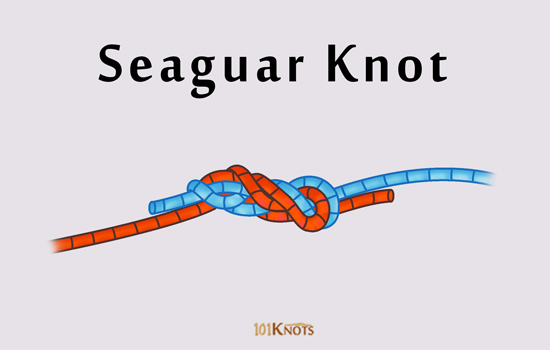
Seaguar Knot

Seaguar Knot

Seaguar-Knot.webp

Seaguar Knot

The knot was introduced to America by the factory representatives of the fluorocarbon line maker company Seaguar. It is a simple and reliable knot made with a double line that connects a fluorocarbon leader to a monofilament line.  Maintaining a high percentage of the main line strength, the knot has a wind-on profile and is great while using long, low-visibility leaders. The breaking strength has been found to be 11 to 13 pounds in tests. It works with lines of the same diameter and may slip for braid to mono connections.

IMG_3339.jpeg

Tips

  1. Give yourself enough line to work with.
  2. It is important to moist the lines before tying. A chapstick serves the purpose well.
  3. After finishing the knot, trim off excess tag ends if any.

Seaguar Knot v/s Other Knots

  1. Surgeon’s knot – An end is wrapped along the circumference of the loop formed by the double line instead of twisting the 2 loops themselves as in the Seaguar knot.
  2. Dropper loop – A loop knot and weaker.
  3. Double uni knot – More reliable.

How to Tie a Seaguar Knot Step by Step

  1. Make loops with the red and blue ropes and hold
  2. Twist them 3-4 times
  3. Pass the right end through the loops
  4. Bring the end down
  5. Pull on both the ends
  6. The knot is now tightened and complete
Posted on Leave a comment

Alberto Knot

Alberto Knot (Modified Albright Knot)

Alberto-Modified-Albright-Knot.webp

Alberto (Modified Albright) Knot

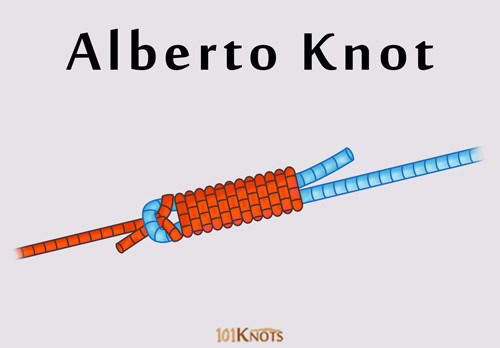
The fishing knot gives a powerful braid to fluorocarbon or mono leader connection. It is a slightly modified, stronger version of the Albright or Albright special knot and can be used as a replacement for the latter. It is an excellent knot for joining 2 lines of different diameters and composition due to which it has won rave reviews among anglers. It was invented by Alberto Knie nicknamed Crazy Alberto. 

IMG_3338.jpeg

Tips

  1. It can be tied really fast after practicing a few times.
  2. Cinching it properly prevents failure.
  3. 7 is the minimum number of wraps as indicated above. You can go up to 10 if you wish.

Variation

  1. Improved Alberto Knot – Step 3 is repeated twice before proceeding with the remaining steps. It enhances the performance and allows the tag end to be cut very close to the knot.


Advantages

Disadvantages

• Great breaking strength

• The small size allows it to be cast through the guides

• Gives double cinching protection

• Not tightening it very well makes it prone to slipping

Alberto v/s Other Knots

  1. Uni to uni (double uni) knot – Weaker.
  2. FG knot – Stronger as proved in strength tests. However, takes longer to tie.
  3. Blood knot – Does not work well with lines of different diameters.
  4. Yucatan knot – More complex.

Steps to Tying an Alberto Knot (Modified Albright Knot)

  1. Wrap the red rope around the blue rope bight 7 times
  2. Wrap it in the opposite direction
  3. Pass it through the blue loop as shown
  4. Pull both ends to tighten
  5. Trim off excess tag ends
  6. The knot is complete
Posted on Leave a comment

Double Fisherman’s Knot

Double Fisherman’s Knot

Double-Fisherman’s-Knot.webp

Double Fisherman’s Knot

The double fisherman’s knot, also known as the grapevine knot uses two double overhand knots in their strangle knot form, one tied around the standing part of the other. This makes it stronger than the fisherman’s knot. Though mainly used as a bend to join two ropes it can also be tied with the ends of a single rope to make a loop with it. Examples are the Bachmann knot and the Prusik loop utilized in tying the Prusik knot. It is used in creating a cordelette to assist rock climbers.

IMG_3336.jpeg

Tips

  1. The back view of the knot shows a symmetrical structure.
  2. The triple fisherman’s knot is recommended for high modulus ropes used for load bearing.
  3. Some tests with specific ropes have shown that it has a breaking strength of around 5,820 pounds and depletes around 46.1% of the rope’s original strength (54 % efficiency).

Advantages

Disadvantages

Easy to tie

If tied wrongly, likely to fail

Compact

Jams so badly that it is almost welded

Strong

Difficult to untie

Uses

  1. To join two lengths of fishing lines by fishermen
  2. Provides a powerful and reliable way of joining 2 climbing ropes
  3. In search and rescue operations
  4. Allows retrieval of the rope even after being used for a full rope-length abseil
  5. Backing up important knots
  6. Creating termination knots by arborists
  7. Tying webbing
  8. Making paracord bracelets and necklaces
  9. In knot-tying ceremonies at weddings

Steps to Tying a Double Fisherman’s Knot

  1. Make a loop with the red rope
  2. Loop once more and feed its end into it
  3. Make a loop with the blue rope
  4. Loop again and tuck its end into it
  5. Tighten the two individual knots by their tag ends
  6. Pull the standing parts to draw the knots close together

Alternatives

Posted on Leave a comment

Fisherman’s Knot

Fisherman’s Knot

Fishermans-Knot.webp

Fisherman’s Knot

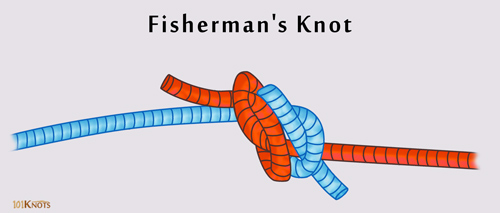
Fisherman’s knot, also known as English knot, consists of two overhand knots each one tied around the standing part of the other one. Though it is mainly used as a bend to join two lines, it can be easily used to connect the ends of a single length of rope to form a loop. The beauty of the knot lies in its symmetry.

IMG_3335.jpeg

Tips

  1. It is good for tying on small diameter twines and strings, especially fishing lines.

Variations

  1. Double fisherman’s knot – Instead of employing overhand knots, it uses a couple of double overhand knots in their strangle knot forms. Stronger.
  2. Triple fisherman’s knot – In this variant, for each of the two stopper knots, the working end is wrapped thrice around the standing line before being fed into the loops. You can even have a quadruple version using 4
  3. True lover’s knot – Though tied on the same principle basically, the overlapping of the overhand knots is a bit different. Due to almost similar structure, sometimes used as an alternative name of the fisherman’s knot itself.

Advantages

Disadvantages

• Compact

• Strong

• Does not slip under strain

• Working ends can be cut very close to the knot without risk of failure

• Can be tied even with cold, wet hands

• Can slip when tied in slippery lines such as nylon monofilament

• Jams when tightened (However, this is advantageous for fishing purposes). Difficulty in untying makes it differ from the sheet bend.

Uses

  1. Fishing
  2. Knitting.
  3. Scouting.
  4. Net making.
  5. Tying webbing.
  6. Rock climbing and by arborists.
  7. Backing up other less secure knots.
  8. Making macramé jewelry, paracord bracelets and keychains.
  9. In knot-tying ceremonies of weddings to symbolize how bonds grow stronger under strain.

Steps to Tying a Fisherman’s Knot

  1. Make a loop with the red rope and feed its end into it
  2. Make another loop with the blue rope and tuck its end into it
  3. Tighten the two individual knots by their tag ends
  4. Pull the standing parts to draw the knots close together
Posted on Leave a comment

Slim Beauty Knot

Slim Beauty Knot

Slim-Beauty-Knot.webp

Slim Beauty Knot

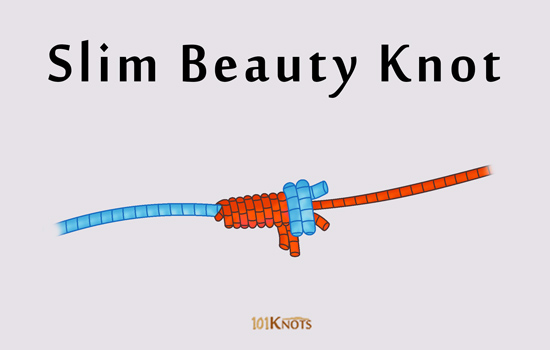
This strong knot offers an innovative way of tying tippets or leaders to the main line. Being easy to learn and possessing a low profile it has become hugely popular in a short span of time. It effectively joins a slippery braided line to a monofilament leader. It is excellent in joining different diameters and materials of lines. Tests have shown it to retain close to 100% of the of the line’s breaking strength. It can be tied to shock leaders as well.

IMG_3334.jpeg

Tips

  1. The first step involves tying a double overhand knot and pulling it down loosely.
  2. It helps if you moisten the knot before tightening.

Variations

  1. Improved slim beauty knot – Has an extra locking point that eliminates line slippage and increases durability.
  2. Modified slim beauty knot – Employs a uni knot for the base.

Advantages

Disadvantages

• Compact

• Straight when completed

• Eliminates the need of a Bimini twist for tying a tarpon leader

• Slides easily through fishing rod guides

• Perfect for tangle-free, long casts

• Tough to tie in low light conditions

Slim Beauty v/s Other Knots

  1. Double uni knot – Stronger
  2. Blood knot – More suited for lighter braid
  3. Albright knot – Simpler
  4. FG knot – Stronger, simpler to tie, smaller

Steps to Tying a Slim Beauty Knot

  • Pass both ends through the blue loop and semi tighten
  • Pass the red rope bight through the blue “8”
  • Wrap it around the blue standing part 4 times
  • Wrap it back around the blue standing part 3 times
  • Pull the ends to tighten
  • Trim the ends and the knot is made
Posted on Leave a comment

Double Uni Knot

Double Uni Knot or Uni to Uni Knot

Double-Uni-Knot-Uni-to-Uni-Knot.webp

Double Uni Knot / Uni to Uni Knot

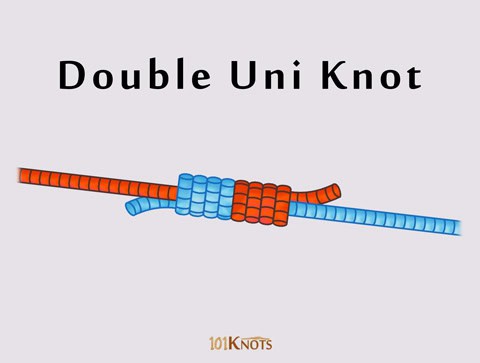
You can join 2 lines of varying or similar strengths with this fishing knot. It is basically tying the uni knotwith the line doubled, twice at 2 ends. It is used by both salt and freshwater anglers. When tying braid to mono, make 5+ turns with the mono and 8 turns with the slippery braid. It can unite a fluorocarbon leader with a braided main line and is a good mono to mono knot. It is also known as the double Grinner knot.

IMG_3333.jpeg

Tips

  1. If you are not using the swivel, the double uni knot is a good option.
  2. Breaking strength is less than 100% but over 90%.
  3. It can be used for tying tapered leaders or tippets

Variation

  1. Double double uni knot – For joining a braid to a fluoro leader, the former is doubled over before tying the knot.

Advantages

Disadvantages

• Works well

• Strong when tied correctly

• Quick to tie

• Simple

• Doesn’t slip or break in most cases

• Not the strongest option for braid to mono and braid to fluoro leader connections.

• When tying mono to braid, tends to overstretch the mono.

Double Uni v/s Other Knots

  1. Easier than the blood knot.
  2. The FG and J knots are stronger.
  3. Passes more easily through guides than the Albright knot.
  4. The Alberto knot, though smaller, keeps rubbing against rod guides and becomes loose letting go of precious catch. The double uni is better in this respect.
  5. It is stronger than the surgeon’s knot. However, the latter can be tied faster.
  6. More reliable than the Seaguar knot.
  7. Though it works for braid to braid unions, the modified double uni boasts of a greater breaking strength.

Uses

  1. Fly fishing.
  2. To connect super lines or braids to mono or fluoro leaders.
  3. To join shock leader to mono.
  4. On drop shot rigs.
  5. For lure casting.

How to Tie a Double Uni Knot Step by Step

  1. Overlap the 2 ends 2 and wrap the blue end around both ropes
  2. Take it out through the loop and pull as directed
  3. Take the red end and wrap it around both ropes
  4. Pass it through the loop formed by the red rope
  5. Pull to tighten
  6. Pull the standing parts in opposite directions
  7. The individual knots will draw close together. Trim off excess tag end
  8. The knot is made
Posted on Leave a comment

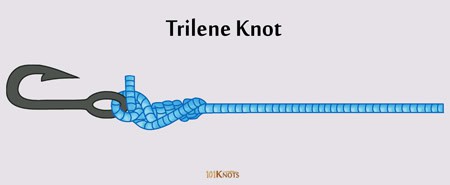
Trilene Knot

Trilene Knot

Trilene-Knot.webp

Trilene Knot

The Trilene knot is a powerful and reliable fishing knot that is effective in tying a monofilament or fluorocarbon line to swivels, hooks, snaps and lures. It is known to retain about 85-90% of the line’s original strength. The retention capacity goes up even more when the diameter of the eye is greater than that of the line. It was researched and developed by the Berkley tackle company and is recommended by them to tie their monofilament.

IMG_3330.jpeg

Tips

  1. For security reasons, leave about 1/8th of an inch when trimming the tag end.
  2. You may moisten the knot for allowing it to be pulled tightly in the last step.
  3. The double loop formed in step 1 makes the knot

Advantages

Disadvantages

• Resists failures and slippage

• Can be used with nylon and Dacron braids

• Not suitable for gel spun braided lines

Uses

  1. In fly fishing.

How to Tie  a Trilene Knot Step by Step

  1. Pass the working end twice through the eye of the hook
  2. Turn it around the standing part 4 times
  3. At the 5th turn, pass it through the double loop at the hook
  4. Tighten and cut off excess tag end, if any

Alternatives

  1. Improved clinch knot – A weaker substitute, it gives the initial double knot a miss and employs an extra tuck under the final turn.
  2. Clinch knot – Even weaker, basically used for fly to tippet connections.
  3. Uni knot – Easy to tie and dependable for joining monofilament to terminal tackle.
  4. Palomar knot – Very strong suitable for fluoro, mono and braided lines.
  5. Nanofil knot – Basically a double Palomar knot.